Can a root-filled tooth hurt again?
Yes. A tooth that has had root canal treatment no longer contains a living nerve, but it is still surrounded by a ligament and bone, and these remain sensitive. If bacteria survive or return inside the canals, inflammation develops at the tip of the root, causing pain on chewing, swelling or a small boil on the gum. In many cases the tooth can still be saved with root canal retreatment, in other words a second root canal treatment.
Retreatment is not simply a repeat of the first procedure. It involves removing the old root filling, finding out what allowed bacteria to persist or come back, then cleaning and sealing the canal system more thoroughly. When this is not possible, two other routes are discussed: apical surgery, or extraction followed by a replacement.
The right choice depends on the condition of the root, the quality of the crown and the bone supporting the tooth. This article helps you understand each option before you discuss it with your dentist.
Why root canal treatment can fail
A root is not a single smooth tube. It often contains several canals, fine side branches, curves and isthmuses connecting one canal to another. The aim of root canal treatment is to remove as many bacteria as possible from this complex network and then seal it. Infection can come back for several reasons:
- an untreated canal: some teeth, such as upper molars, frequently have an extra canal that is hard to locate;
- an incomplete root filling: a canal filled short, voids along the material, or an area left uncleaned;
- leakage from above: recurrent decay, an opening crown margin or a temporary filling left too long lets bacteria from saliva recontaminate the canals;
- difficult anatomy: severely curved or calcified canals, or an instrument that separated during the first treatment;
- a crack or fracture in the root, sometimes invisible to the naked eye.
It also helps to know that a lesion at the root tip takes time to heal. A shadow still visible a few months after the first treatment does not always mean failure: what matters is how it changes over time.
Warning signs to look out for
A failed root canal is not always painful. Sometimes it is found by chance on a check-up X-ray, as a dark area at the end of the root. When there are symptoms, the most common are:
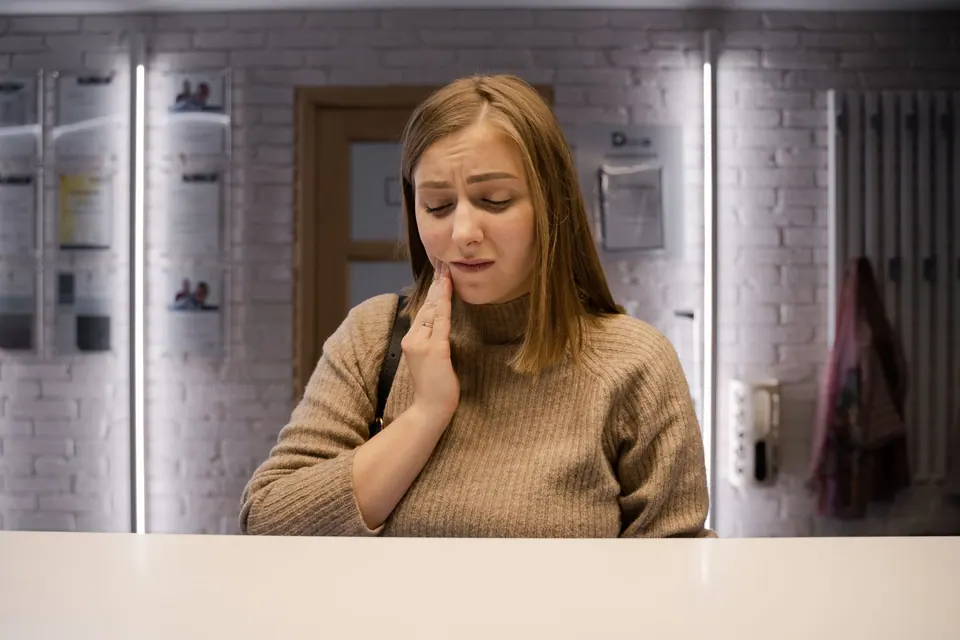
- pain when biting or tapping on the tooth;
- a feeling that the tooth is "higher" than its neighbours;
- a small boil on the gum (sinus tract) that occasionally releases pus and then disappears;
- swelling of the gum or cheek;
- a persistent bad taste in the mouth;
- a dull ache that comes back in episodes, often during a cold or a tiring period.
Severe pain with spreading swelling, fever, or difficulty opening your mouth or swallowing is an emergency: the infection then needs draining and treating quickly. To recognise these situations, you can read our article on dental abscesses.
On the other hand, mild tenderness in the days following recent treatment is common and does not mean the treatment has failed.
Diagnosis: clinical examination and imaging
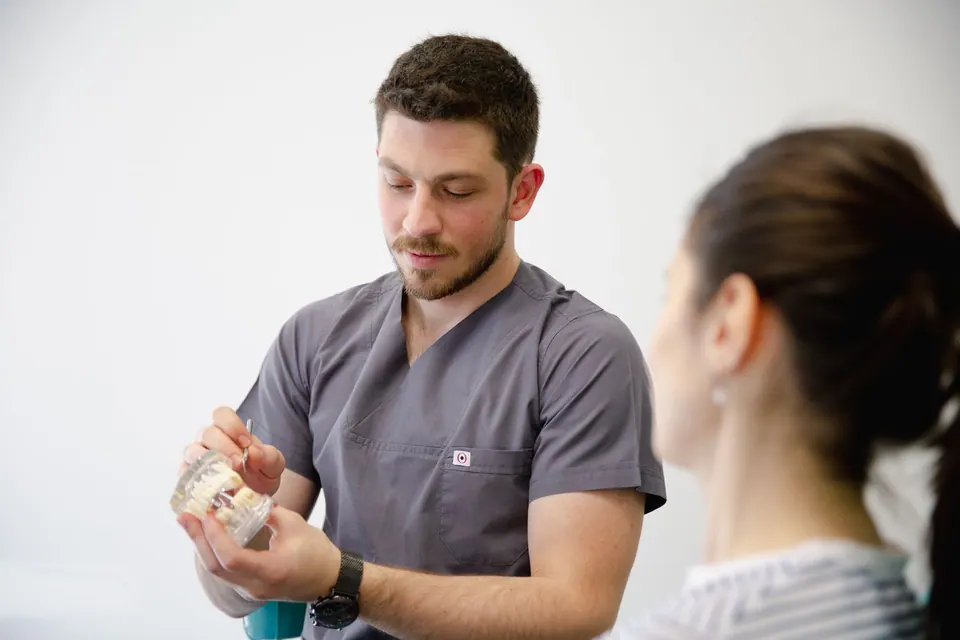
Before suggesting retreatment, the dentist needs to answer two questions: is the pain really coming from this tooth, and can the tooth be saved?
The examination includes listening to your symptoms, percussion and palpation tests, looking for a sinus tract and probing the gum all the way around the root. A deep, narrow pocket in a single spot may point to a vertical root fracture, a situation in which retreatment generally offers no lasting solution.
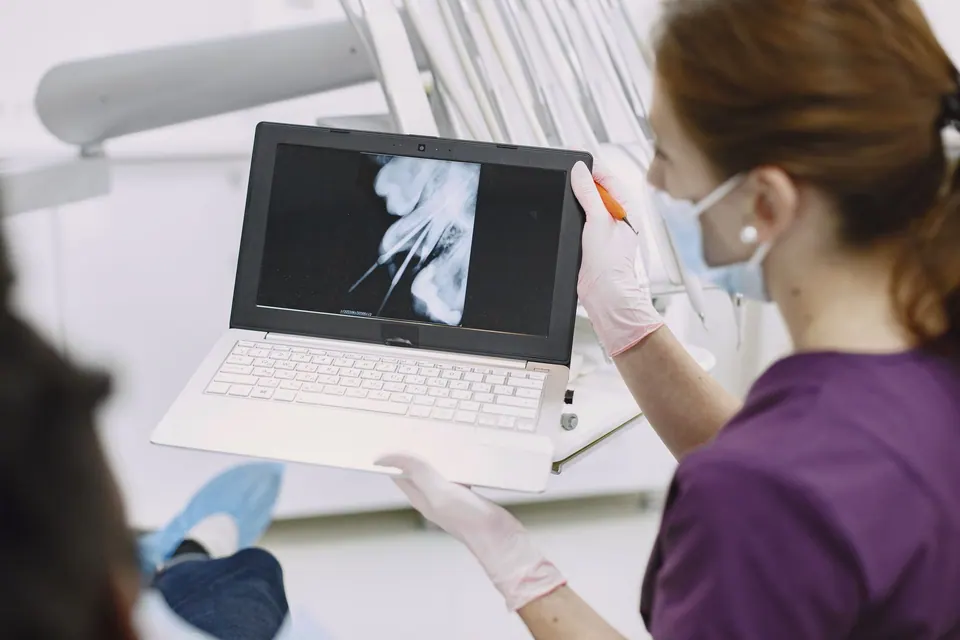
Digital periapical and panoramic X-rays show the length and density of the old filling, whether there is a post, a lesion at the root tip or decay under the crown. In complex cases, three-dimensional cone beam imaging may be indicated to detect a missed canal, a fracture or the exact extent of a lesion; your dentist will tell you whether this examination is useful in your case.
Finally, the assessment looks at what will be left of the tooth: the amount of sound tissue, whether it can be properly rebuilt and protected, and the condition of the gum and bone.
Root canal retreatment step by step
Retreatment is carried out under local anaesthetic, often in one or two visits depending on how difficult it is. The usual steps are:
- Isolating the tooth with a rubber dam: a thin rubber sheet keeps saliva away from the tooth throughout the procedure.
- Accessing the canals: the existing crown or filling is drilled through or removed. If a post was placed in the root, it is carefully taken out.
- Removing the old root filling: the gutta-percha is removed with rotary instruments and, where needed, a solvent.
- Searching for missed canals: with good lighting, and sometimes optical magnification, the dentist explores the floor of the pulp chamber.
- Cleaning and disinfection: the canals are shaped and irrigated generously, notably with sodium hypochlorite. A calcium hydroxide dressing may be left in the canals between visits.
- A new, well-sealed root filling to the end of each canal.
- Restoring the top of the tooth: this is a decisive step. A tight seal, often completed with a dental crown or an onlay on back teeth, protects the tooth from fresh contamination and from fracture.
Retreatment is technically more demanding than a first treatment: some obstacles, such as a separated instrument or a completely calcified canal, cannot always be overcome.
Apical surgery or extraction: the other options
When retreatment through the top of the tooth is impossible or risky, for example under a large post that is hard to remove, or on a tooth with a recent, well-fitting crown, apical surgery (apicectomy) may be considered. Under local anaesthetic, the gum is opened over the root, the lesion is cleaned out, the last few millimetres of the root are removed and the end of the canal is sealed from below with a biocompatible cement, often a bioceramic. It is best suited to teeth whose root canal treatment is otherwise of good quality.
Extraction becomes the sensible option when the root is fractured, the tooth is too broken down to rebuild, or the supporting bone is badly destroyed. The tooth can then be replaced with an implant, a bridge or a removable denture; our article implant or bridge compares these solutions.
Keeping your natural tooth is, in principle, preferable when the outlook is good. But persisting with a hopeless tooth can delay its replacement and allow the bone to shrink. An honest assessment of the prognosis, tooth by tooth, is therefore essential.
Aftercare and assessment in Agdal
After retreatment, tenderness on chewing for a few days is normal and is usually managed with the painkillers your dentist recommends. Avoid biting hard on the tooth until the final restoration is in place, as a weakened root-filled tooth can split.
Bone healing is not visible straight away. A follow-up X-ray is usually scheduled after several months and again later on, to check that the lesion is shrinking. After that, careful oral hygiene and regular check-ups protect the seal between the tooth and its restoration.
A few useful questions to ask your dentist:
- What do you think most likely caused the first treatment to fail?
- Can the tooth be properly rebuilt after retreatment?
- What are the alternatives, and what happens if I do nothing?
At German Dental Clinic in Agdal, a painful root-filled tooth is assessed with a clinical examination and digital X-rays, followed by a clear explanation of the possible options. If you are in Rabat and an old root canal is bothering you, you can book an appointment for an assessment.
Frequently asked questions
Is retreatment more painful than the first root canal?
No. It is done under local anaesthetic and generally feels much the same during the appointment. It can take longer, however, because the old filling has to be removed and the canals explored. Tenderness on biting for a few days afterwards is common, especially if there was an infection at the root tip.
Does the crown need replacing after retreatment?
Not always. If the crown fits well and the canals can be reached through it, it can sometimes be kept and the access hole sealed. If it is old, poorly fitting or has decay underneath, it is better to replace it, because a tight seal at the top of the tooth is key to the success of retreatment.
Can antibiotics alone cure an infected root-filled tooth?
No. The bacteria live inside the canals, where antibiotics carried in the bloodstream cannot reach them. They may be prescribed for spreading swelling or fever, but healing requires treating the cause: retreatment, apical surgery or extraction, depending on the situation.
How long before I know whether retreatment has worked?
Symptoms often settle quickly, but the bone around the root rebuilds slowly. A follow-up X-ray is usually planned after several months, and complete healing can take longer depending on the size of the lesion. Your dentist will agree a follow-up schedule with you.
Can I keep a root-filled tooth that does not hurt but shows a lesion on the X-ray?
A painless lesion is still a sign of chronic infection. How it is managed depends on how it evolves, the quality of the existing treatment and your plans, for example a new crown. Your dentist compares X-rays over time and explains whether it is better to treat now or to monitor.
The information on this page is general. Only a consultation allows a diagnosis and a suitable treatment plan.