How local dental anaesthesia works
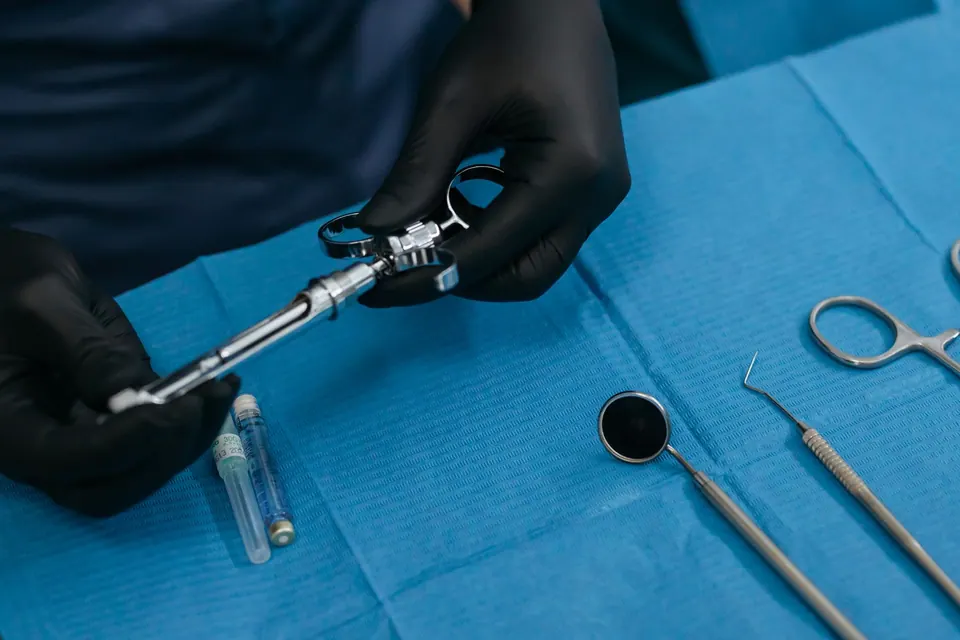
Local anaesthesia temporarily blocks pain signals in the nerves supplying the tooth and gum. The solution, injected close to the nerve, stops the nerve fibres from carrying impulses to the brain for as long as it is present. The tooth becomes insensitive during treatment, then feeling gradually returns, usually within a few hours, as the body clears the drug through the bloodstream.
The molecules most widely used in dentistry are articaine, lidocaine and mepivacaine. They are often combined with a vasoconstrictor (a very small amount of adrenaline) that narrows the blood vessels around the injection site: the anaesthetic lasts longer, there is less bleeding and less of the drug passes into the blood.
The key point: anaesthesia removes pain, not every sensation. Feeling pressure, vibration or movement during treatment is normal.
Infiltration, nerve block, gel: the different techniques
The technique depends mainly on the tooth being treated and the density of the surrounding bone:
- Topical gel or spray numbs the surface of the gum before the injection. It is not enough to treat a tooth.
- Infiltration, the most common technique, places the solution next to the root. The upper jawbone is porous enough for the drug to spread to the tooth.
- The inferior alveolar nerve block, at the back of the jaw, is often used for lower molars, where the bone is thicker. It numbs half of the lower lip, the chin and sometimes the tongue, which explains the wider sensation.
- Supplementary techniques (intraligamentary, intraosseous) target a single tooth, as a top-up or an alternative.
Computer-controlled delivery systems also exist to make the injection more gradual. If the injection itself worries you, our article on fear of the dentist offers practical tips.
How long does the numbness last?
Two durations need to be distinguished. Anaesthesia of the tooth itself, which allows treatment, is relatively short. Numbness of the soft tissues (lip, cheek, tongue) lasts longer: it usually continues for a few hours after the appointment.
Several factors change how long it lasts:
- the technique: a lower nerve block numbs for longer and over a wider area than an upper infiltration;
- the drug, and whether a vasoconstrictor is included;
- the amount needed, which is larger for a tooth extraction or several teeth;
- your metabolism and local circulation, which vary from person to person.
Feeling returns gradually: tingling, a sense of a "thick" lip, then back to normal. Numbness still present the next day, or pins and needles lasting several days, are rare but should be reported to your dentist, who will follow it up.
In some countries, a drug injected at the end of treatment can speed up the return of feeling. It is not available everywhere and is unnecessary in most cases: your dentist will tell you whether it would be useful for you.
After treatment: bitten lip, swollen-feeling cheek, minor effects
Most problems after anaesthesia come from the numbness itself:
- Biting the lip, cheek or tongue: without feeling, it is easy to bite yourself while eating or playing, especially for children. The next day a whitish sore appears, often mistaken for an infection. It usually heals within a few days with good hygiene.
- Burns: a drink that is too hot is not felt. Wait until sensation returns.
- A cheek that feels swollen: this is usually an illusion caused by numbness; real swelling is uncommon.
- A small bruise or a stiff jaw at the injection site, especially after a nerve block: this usually eases within a few days.
- A drooping eyelid or corner of the mouth: a possible temporary effect when the drug reaches a facial nerve; it wears off with the anaesthetic.
Simple advice: do not eat while your mouth is numb, supervise children until feeling returns and remind them not to chew their lip.
Why anaesthesia "does not take" on an inflamed tooth
It is a common complaint: the tooth that hurts most is also the one that is hardest to numb. This is not imagined; several mechanisms explain it:
- inflammation makes the tissue more acidic, reducing the share of the drug able to cross the nerve membrane;
- inflamed nerve fibres become hyperexcitable and respond more easily to stimulation;
- an abscess alters the circulation and tissues around the root.
There are other reasons: anatomical variations (an accessory nerve, a split canal), very dense bone in the lower jaw, or strong anxiety that lowers the pain threshold.
Your dentist has solutions: adding more anaesthetic, changing the injection site, using an intraligamentary or intraosseous technique, or waiting a little longer. In some cases the inflammation is calmed first and part of the treatment is postponed. Pain should never be endured in silence: say so, treatment can be stopped at any time.
This is also a good reason not to wait for severe toothache: decay treated early, on a tooth that is not yet inflamed, is usually easier to numb, and the treatment is shorter and simpler.
Pregnancy, heart conditions, allergies: what to mention
Local dental anaesthesia is used routinely, but some information helps your dentist choose the drug and the dose:
- Pregnancy and breastfeeding: local anaesthesia is considered compatible, and leaving an infection or pain untreated carries more risk than treating it. The second trimester is the most comfortable time for planned treatment (see our article on pregnancy and dental care).
- Heart conditions: for most patients with a stable heart condition, adrenaline at dental doses can still be used in limited amounts. Mention a recent heart attack or stroke, unstable angina, poorly controlled high blood pressure or a heart rhythm disorder.
- Medicines: anticoagulants (risk of bruising with a nerve block), beta blockers, some antidepressants, thyroid treatments.
- Allergies: true allergy to modern dental anaesthetics is very rare. Reactions that look like allergy are often due to stress or adrenaline. An allergy to sulphites or latex must be mentioned.
- Children: the dose is calculated according to body weight.
Bring a list of your medicines and recent prescriptions: it is the best way to ensure your anaesthesia is tailored to you.
Preparing for treatment under anaesthesia in Agdal
Before cavity treatment, a root canal or an extraction, the medical questionnaire is not a formality: it guides the choice of anaesthetic. At German Dental Clinic in Agdal, the dentist explains the planned technique, the waiting time before treatment starts and roughly how long the numbness will last, so you can plan your meal or your return to work.
Have a light meal before the appointment unless told otherwise, and mention if a previous anaesthetic was difficult or poorly tolerated. If you are in Rabat and would like to schedule treatment, you can book an appointment.
Frequently asked questions
Can I drive after a dental anaesthetic?
A local anaesthetic on its own does not usually prevent you from driving, because it only affects the mouth. If you feel tired, light-headed or very tense after treatment, it is better to wait a while or have someone take you home. If any other medicine was given, ask your dentist.
How long should I wait before eating?
Ideally, wait until feeling has fully returned to your lip, cheek and tongue, which usually takes a few hours. In the meantime you can carefully drink cool water. After an extraction, also follow the specific instructions you were given on the day.
I think I am allergic to dental anaesthetic: what should I do?
Mention it before treatment and describe exactly what happened. True allergies to current dental anaesthetics are very rare; what people experience is often a stress reaction or an effect of adrenaline. If a serious doubt remains, your dentist may ask for an allergist's opinion before going ahead.
Why did my heart race after the injection?
A small amount of the adrenaline in the anaesthetic can reach the bloodstream and cause brief palpitations or a shaky feeling. Stress can produce the same effect. It usually passes within a few minutes. If you have a heart condition, mention it so the drug can be adjusted.
I am breastfeeding: do I need to stop after the anaesthetic?
As a rule, no. Local anaesthetics used in dentistry pass into breast milk in very small amounts and are considered compatible with breastfeeding. Still mention it to your dentist, especially if other medicines such as painkillers or antibiotics need to be prescribed after treatment.
The information on this page is general. Only a consultation allows a diagnosis and a suitable treatment plan.
A question about your own situation?
Dr Fenjero Walid sees patients in Agdal, Rabat, for an assessment and answers that fit your case.