Braces as an adult: is it possible, and on what conditions?
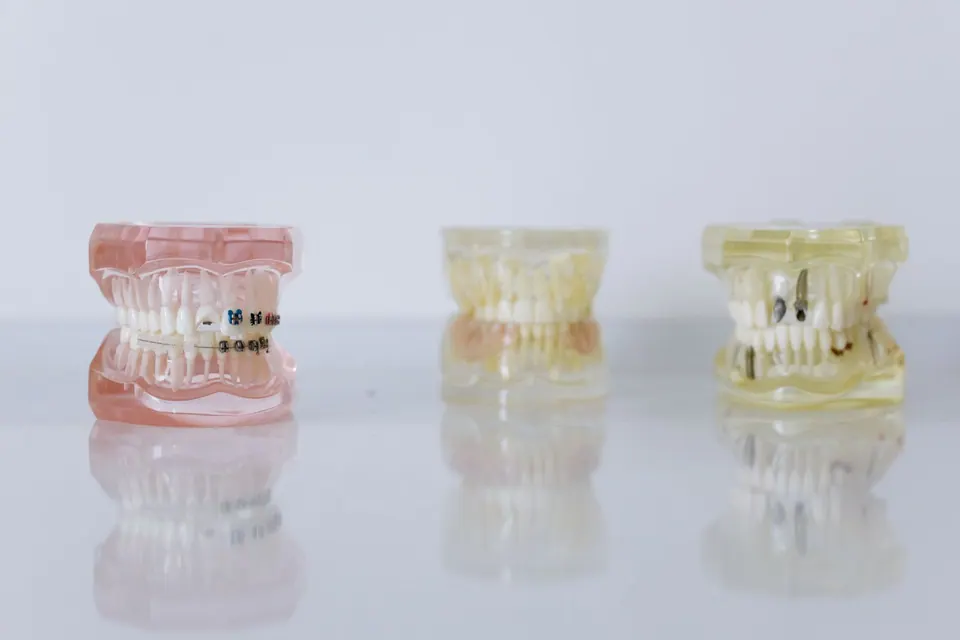
Yes, orthodontic treatment is possible at any adult age. There is no upper age limit, because bone keeps remodelling throughout life and allows teeth to move. The real condition is healthy gums and bone: gum disease must be treated and stable before you start. Today there are four main families of appliance: metal braces, ceramic braces, lingual braces bonded behind the teeth and clear aligners.
Adults seek treatment for many reasons:
- teeth that crowd more over the years, often in the lower jaw;
- a gap opening between the front teeth, sometimes linked to bone loss;
- relapse after teenage treatment without adequate retention;
- preparing for other work: uprighting a tooth before an implant or bridge, rebalancing the bite, preparing for veneers;
- functional problems: wear, or crowded teeth that are hard to clean.
Adult treatment is often more tailored than in teenagers, because it has to work around crowns, missing teeth or weakened gums.
The four types of brace for adults
Each technique has its own logic. German Dental Clinic offers clear aligners; the other appliances are options a dentist or orthodontist may suggest depending on your case, and it helps to know them so you can make an informed choice.
- Metal braces: small steel brackets bonded to the front of the teeth and joined by a wire. This is the oldest and most versatile technique, suited to complex cases. They are visible and need careful cleaning around the brackets.
- Ceramic braces: the same principle with tooth-coloured brackets, far less noticeable. They are slightly bulkier, and the clear ties holding the wire can stain with coffee or tea.
- Lingual braces: bonded to the inner surface of the teeth, they cannot be seen from the front. The tongue and speech take longer to adapt, and not every practitioner offers this technique.
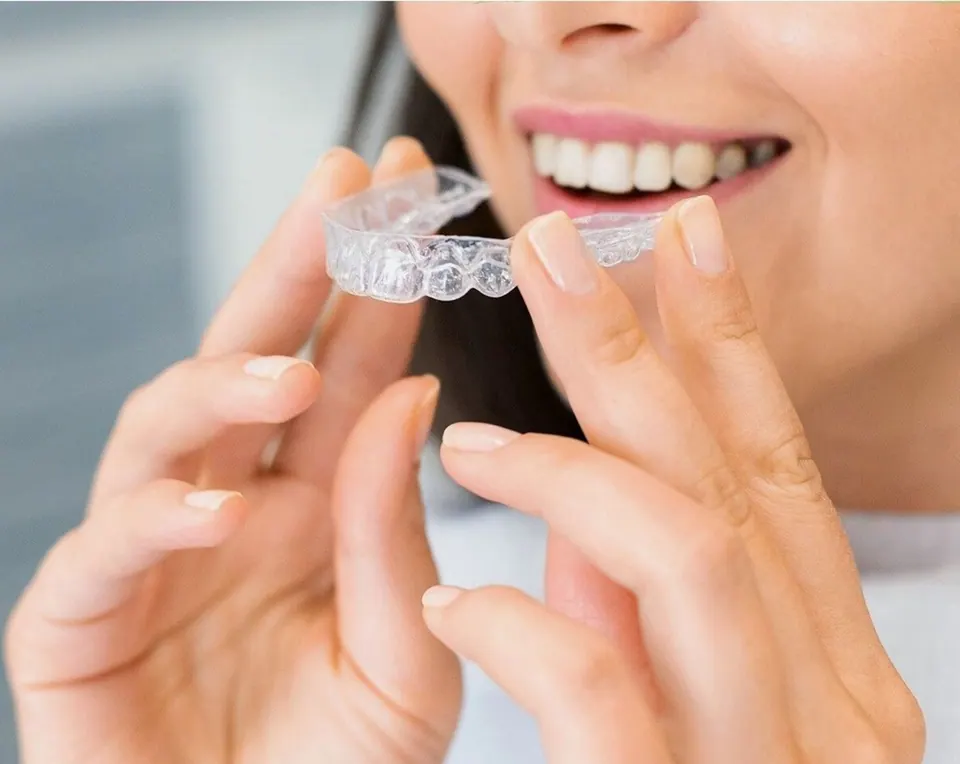
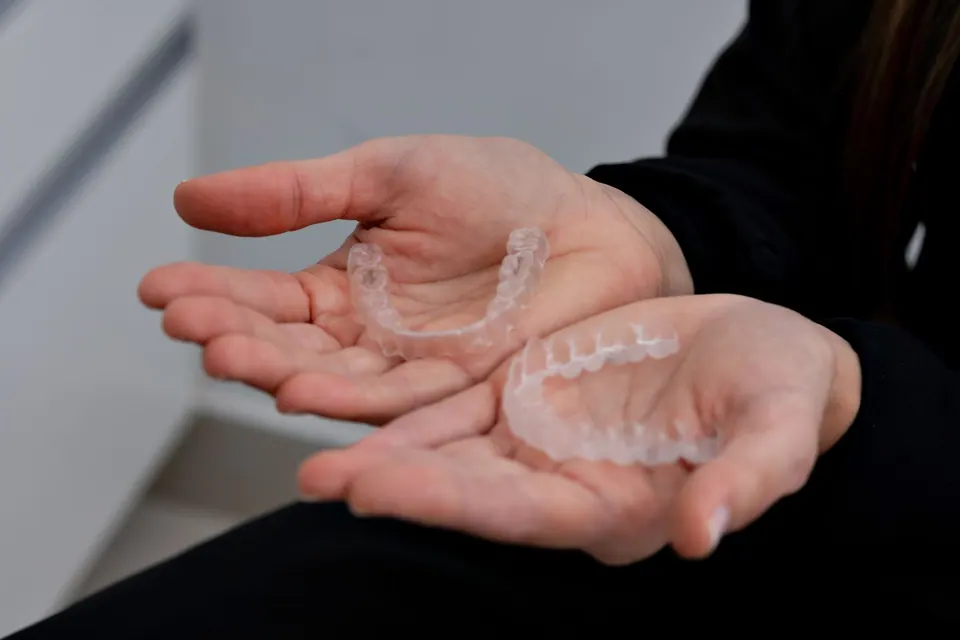
- Aligners: custom-made clear trays changed at regular intervals. Removable and discreet, they depend on being worn almost all the time, otherwise nothing moves.
For a detailed comparison of trays and brackets, see our article clear aligners or metal braces.
How long do braces take for adults?
Treatment time depends mainly on how complex the tooth movements are, not on age alone. As a rough guide, a minor realignment of the front teeth may take months, while correcting how the jaws meet or closing large spaces generally takes more than a year, sometimes longer. Only an assessment can estimate the time for your situation.
Factors that lengthen or shorten treatment:
- the type of problem: moderate crowding, rotations, open bite, jaw discrepancy;
- the condition of bone and gums: after periodontitis, teeth are moved with lighter, more cautious forces;
- crowns, implants or missing teeth, which change the strategy;
- your consistency: wearing aligners or elastics and attending check-ups;
- the need for jaw surgery in major skeletal discrepancies, which is a matter for a specialist team.
At the end, the retention phase begins. It is not counted in the active treatment time, but it is essential and generally continues long term.
Soreness in the first days: what is normal and how to ease it
Braces do not hurt constantly, but tenderness to pressure is usual. It appears a few hours after fitting, after the wire is adjusted or with each new aligner, and generally fades within two to four days. The teeth may feel slightly loose: this shows that the bone is remodelling.
To get through these days more comfortably:
- choose soft foods: soups, mash, eggs, fish, stewed fruit;
- cut food into small pieces rather than biting with your front teeth;
- with braces, put orthodontic wax on a bracket that rubs your cheek while the lining adapts;
- with aligners, put the new tray in at night so you sleep through the first hours;
- a simple painkiller can be taken if needed, following the leaflet;
- warm salt-water rinses soothe minor irritation.
Sharp pain in one tooth, swelling or a sore that will not heal are not normal after-effects: tell your practitioner.
Broken brace, poking wire or lost aligner: what to do
Minor mishaps are common and rarely serious, but they are worth a call to the practice so you do not lose treatment time.
- A loose bracket: it usually stays attached to the wire. Do not pull it; if it bothers you, cover it with wax and let your practitioner know so it can be rebonded.
- A wire poking out at the back: push it gently with the clean rubber end of a pencil or cover it with wax. Do not cut it yourself without advice.
- A loose bonded retainer behind the teeth: get it seen fairly soon, as the teeth can start to move.
- A cracked or lost aligner: the usual advice is to go back to the previous tray, or move on to the next one if it fits well, until your practitioner advises you. Do not go several days wearing nothing.
- An aligner that no longer fits after a break: the teeth may have shifted, and a check-up allows the plan to be adjusted.
Always keep the case with you and never wrap an aligner in a paper napkin at a restaurant: that is how they most often get lost.
Before you start: points specific to adults
In adults, orthodontics takes place in a mouth that has a history. The assessment checks several points:
- Gums and bone: periodontal probing and X-rays assess how well the teeth are supported. If there is periodontitis, gum treatment comes first, followed by close monitoring during orthodontics.
- Decay and old fillings, to be treated before the appliance is fitted.
- Implants: an implant does not move with orthodontics. It can even serve as an anchor, but its position must be built into the plan.
- Crowns and veneers: attachments bond differently to ceramic, which is planned for.
- Thin gums: in some adults, moving a tooth outwards can encourage recession, and the practitioner takes this into account.
- Retention: plan for it from the start. Our article on retainers after aligners or braces explains why it continues long term.
This groundwork is not wasted time: it underpins the safety of treatment and the stability of the result.
The adult orthodontic assessment in Agdal
The first appointment is used to make a diagnosis and check whether your case can be treated with aligners. It includes an examination of the teeth, gums and jaw joint, photos, a panoramic X-ray and a digital impression with an intraoral scanner, without impression paste.
At German Dental Clinic in Agdal, if aligners are suitable the practitioner presents the plan and the planned stages; if your situation calls for fixed braces or surgical treatment instead, you will be told clearly and referred. If you live in Rabat and are thinking about straightening your teeth as an adult, you can book an appointment for an initial assessment.
Frequently asked questions
Can I have braces at 40, 50 or 60?
Yes. Age is not a contraindication in itself, because teeth can move as long as the surrounding bone is healthy. What matters is the condition of your gums, the amount of bone, existing dental work and your general health. Some medicines, such as osteoporosis treatments, must be mentioned because they can affect tooth movement.
Do braces damage teeth?
When treatment is well managed and hygiene is good, no. The risks come mainly from plaque collecting around brackets or under aligners, which can leave white spots or decay. A slight shortening of root length can occur during treatment, which the practitioner monitors with X-rays when needed.
Can I eat normally with braces?
With aligners, yes: you take them out to eat, then brush before putting them back. With fixed braces, avoid hard or sticky foods (toffee, whole nuts, very hard bread) that knock brackets off, and cut fruit and meat into small pieces.
Do aligners affect speech?
A slight lisp is possible in the first few days while your tongue gets used to the thickness of the tray. It usually disappears quickly, and reading aloud helps you adapt faster. Lingual braces, bonded behind the teeth, often need a longer period of speech adjustment.
My teeth moved years after my teenage braces: can this be fixed?
In most cases, yes. Mild relapse, common when retainers have been abandoned, can often be corrected with a shorter treatment than in adolescence, frequently with aligners. The assessment checks gums and bone first, and a new retainer is planned so it does not happen again.
The information on this page is general. Only a consultation allows a diagnosis and a suitable treatment plan.