Does decay in a baby tooth need treating?
Yes, in most cases. A decayed baby tooth can hurt, become infected and sometimes damage the adult tooth forming just beneath it. The choice of treatment, however, depends on two things: how far the decay has gone and how long the tooth has left before it falls out naturally. A small lesion on a tooth due to fall out within months can simply be stabilised and monitored; deep decay in a baby molar that still has years of work ahead needs proper treatment.
The idea that baby teeth do not matter often comes from confusion about timing. Baby incisors fall out early, but baby molars stay in the mouth until around 10 to 12 years of age. Decay found at age 4 on a molar therefore concerns a tooth that still has a long way to go. Our article on baby teeth lists when each one is lost.
Another feature: baby teeth have thinner enamel and a larger nerve. Decay spreads quickly and reaches the nerve sooner than in an adult tooth, sometimes within a few months, and often without the child complaining.
What happens when decay is left untreated
Decay in a baby tooth develops in stages, and each one makes the next treatment more involved:
- the white spot: the enamel loses minerals near the gum, while the surface is still intact;
- the cavity: the spot turns brown and hollows out, and sweet or cold foods may start to bother the child;
- nerve involvement: spontaneous pain, especially at night, and difficulty chewing on one side;
- the abscess: the nerve dies and an infection forms at the root tips; a small pimple sometimes appears on the gum, or the cheek swells.
At this last stage, the consequences go beyond the tooth itself. The infection lies very close to the developing adult tooth and can disturb its formation: a spot or defect in the enamel, or a tooth that erupts poorly. Losing a baby molar early also lets the neighbouring teeth slide into the gap, which can stop the premolar from coming through or cause crowding.
Finally, a mouth with several active cavities makes decay more likely on the first adult molars, which come through around age 6 just behind the baby molars. Treating early also protects the adult teeth.
Early childhood caries, or bottle decay
Early childhood caries refers to one or more cavities appearing before the age of 6. Its most severe form, often called bottle decay, has a recognisable pattern: it first affects the upper front teeth, right at the gumline, then the molars, while the lower front teeth are spared for a long time, protected by the tongue and saliva.
This pattern comes from teeth being bathed in sugary liquids during sleep, when saliva flow drops sharply:
- a bottle of milk, juice or sweetened water given to fall asleep or during the night;
- a dummy dipped in honey or sugar;
- frequent snacking and sugary drinks during the day;
- missing or irregular brushing once the first teeth have appeared.
This type of decay can destroy the front teeth of a 2- or 3-year-old in a short time. It is neither inevitable nor a reproach to parents: it is a signal to act quickly, on both the affected teeth and the habits. Day-to-day prevention is covered in our article on tooth decay.
Treatment options by stage
Treating decay in children offers several options, chosen according to the depth of the lesion, the child's age and how well they can cooperate:
- Stopping an early lesion: on a white spot, fluoride varnish applied at the surgery, combined with better brushing and less sugar, can remineralise the enamel. There are also products that arrest decay without drilling, such as silver diamine fluoride; effective in some situations, they stain the decay black, which limits their use.
- A filling: the decayed part is removed and the tooth filled, often with a fluoride-releasing glass ionomer cement or with composite. In deep decay, the dentist may deliberately leave a thin layer of dentine to avoid reaching the nerve.
- A pulpotomy: when decay has reached the nerve of a baby molar without infecting it, only the upper part of the nerve is removed and a protective material is placed. It is the paediatric equivalent of a partial root canal treatment.
- A pulpectomy: full cleaning of the roots when the nerve is infected but the tooth is worth keeping.
- A preformed children's crown: a small cap, often stainless steel on molars, that protects a badly broken-down or treated tooth until it falls out. Tooth-coloured versions also exist for front teeth.
- Extraction: when the infection is too advanced, the tooth cannot be restored, or natural loss is imminent.
After early extraction: the space maintainer
When a baby molar has to be removed well before its time, the neighbouring teeth tend to tip into the gap. The room meant for the premolar shrinks, and the premolar may then come through crooked or even stay trapped.
A space maintainer prevents this. The most common design is a small band cemented to a neighbouring tooth, with a wire loop that keeps the space open. It stays in place until the adult tooth arrives and is then removed.
It is not always needed. The dentist decides based on:
- which tooth was lost, molars being the most concerned;
- the child's age and how long remains before the adult tooth erupts;
- whether that tooth is present, and its position, on the X-ray;
- how much space is already available in the arch.
For baby front teeth lost early, space loss is less common, but cosmetic solutions exist if the gap bothers the child.
A space maintainer requires good hygiene around the band and regular checks: an appliance that comes loose or gets damaged should be reported promptly.
What treatment is like for a young child
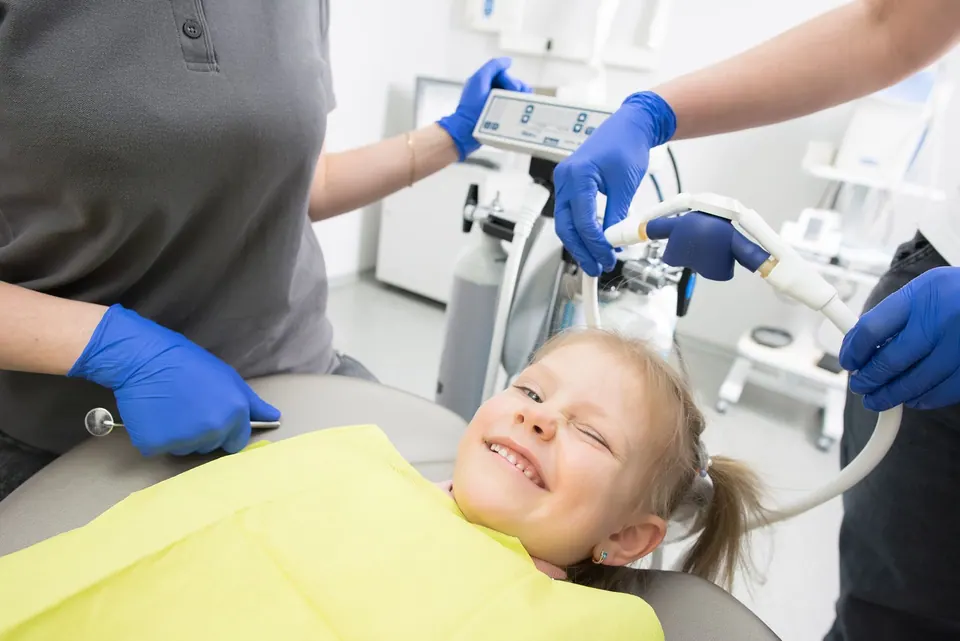
Treating a baby tooth also means taking care of the child's experience, which shapes their relationship with the dentist for years. A few principles guide the visit:
- explaining in simple words and showing the instruments before using them;
- short sessions, ideally in the morning when the child is rested;
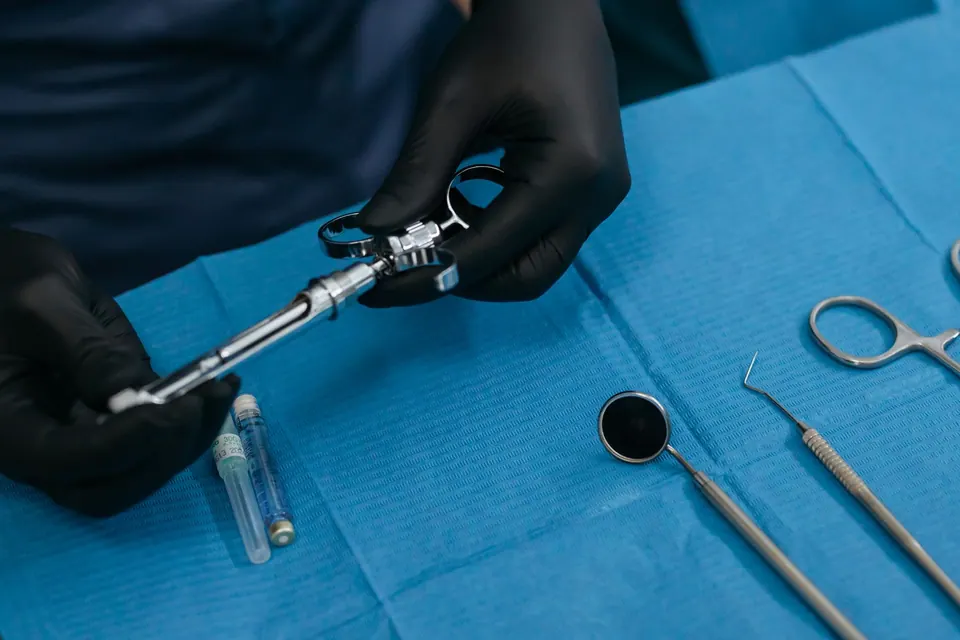
- a numbing gel before the local anaesthetic, so that the injection is painless;
- starting, where possible, with the simplest treatment to build trust.
Parents play a valuable part. Avoid frightening words, do not promise that nothing will be felt, and never present the dentist as a punishment. Your calm passes to your child.
For very young children with many cavities, or when cooperation is impossible, other approaches exist: conscious sedation by inhalation, or treatment under general anaesthetic in a hospital setting. They are discussed case by case, and the dentist will refer you if they are needed.
Once treatment is finished, the work continues: decay in a young child signals a high risk, which justifies closer check-ups and a prevention plan adapted to the family.
Having your child's baby teeth checked in Agdal
A white spot near the gum, a tooth turning dark, a child chewing on one side only or waking at night holding their cheek: these are all reasons to come in rather than wait for the tooth to fall out.
At German Dental Clinic in Agdal, children's dentistry appointments are offered from the very first teeth. The practitioner examines each tooth, assesses decay risk, takes an X-ray if it is useful, then suggests a plan that deals first with painful or infected teeth and explains the options for the rest.
If you live in Rabat and have noticed decay on a baby tooth, book an appointment: the earlier it is seen, the simpler the treatment stays for your child.
Frequently asked questions
My child is not in pain: does the decay still need treating?
Yes, the absence of pain does not mean the decay is harmless. In children, decay can reach the nerve, or even cause an abscess, without any particular complaint. An examination shows how far it has gone and allows the simplest possible treatment to be chosen. The earlier decay is caught, the lighter that treatment remains.
Can a baby tooth have root canal treatment?
Yes. When decay reaches the nerve of a baby molar, a pulpotomy removes the upper part of the nerve and often allows the tooth to be kept until it falls out. If the nerve is infected, a pulpectomy, meaning full cleaning of the roots, may be offered. The tooth is then usually protected with a small crown.
Why put a crown on a baby tooth that is going to fall out?
Because a badly damaged baby molar, or one treated at the nerve, becomes fragile and may still need to last several years. A preformed children's crown protects it until it falls out naturally, holds the space for the adult tooth and avoids having to redo one filling after another.
Can decay in a baby tooth damage the adult tooth?
Yes, when it progresses to an abscess. The infection develops next to the developing adult tooth and can leave a spot or defect in the enamel, or interfere with eruption. Losing a baby molar early can also reduce the space for the tooth that is meant to replace it.
Does a child need an anaesthetic to have decay treated?
For a small, shallow cavity, it is not always necessary. As soon as treatment gets close to the nerve, a local anaesthetic is used, preceded by a gel that numbs the gum so the injection is painless. The aim is for the child to feel no pain, which also shapes their trust for future visits.
The information on this page is general. Only a consultation allows a diagnosis and a suitable treatment plan.
A question about your own situation?
Dr Fenjero Walid sees patients in Agdal, Rabat, for an assessment and answers that fit your case.