
What is a tight frenum?
A frenum is a fold of soft tissue linking the tongue to the floor of the mouth, or the lips to the gum. Everyone has them. It only becomes a problem when it is too short, too thick or attached too close to the teeth, to the point of restricting movement or pulling on the gum. In that case, a brief procedure, a frenotomy or frenectomy, can release it; it is justified by a real functional problem, never by the look of the frenum alone.
Three frena are most often involved:
- the tongue frenum (called ankyloglossia, or tongue tie, when it restricts the tongue);
- the upper lip frenum, sometimes associated with a gap between the upper front teeth;
- the lower lip frenum, which can pull on the gum of the lower front teeth.
There are also small side frena near the premolars, which sometimes make a removable denture less stable.
The difficulty is that the signs blamed on a frenum often have other causes. A careful assessment of function, not just appearance, is therefore essential before any decision.
In babies: tongue tie and breastfeeding
In a baby, a short tongue frenum can make latching onto the breast or bottle difficult. The signs usually mentioned are:
- a baby who often comes off the breast, makes clicking sounds or tires quickly;
- very long feeds or slow weight gain;
- in the mother, nipple pain or persistent cracks;
- a tongue that lifts little, does not extend past the gum or takes a heart shape when the baby cries.
None of these signs is specific. Poor positioning, an immature sucking reflex or other feeding difficulties produce the same effects. The first step is therefore an assessment by the paediatrician, midwife or a lactation consultant, who observe the feed and the tongue's mobility.
Diagnoses have risen sharply in recent years, and several professional bodies call for careful selection of the babies who will benefit. When it is indicated, frenotomy in an infant is a very quick procedure, carried out by a professional trained for that age and followed by breastfeeding support.
In children and adults: speech, swallowing and comfort
Later on, a short tongue frenum shows up in a few simple movements: the child cannot touch the palate with the mouth open, stick the tongue out past the lips or lick the upper lip, and the tip of the tongue has a notch.
The possible consequences vary:
- some sounds are difficult, such as a rolled r, l, t or d;
- so-called atypical swallowing, with the tongue pushing against the teeth instead of resting on the palate;
- a low resting tongue position, which can affect palate development and contribute to some orthodontic problems;
- difficulty clearing food trapped around the teeth;
- in adults, trouble playing a wind instrument or a lower denture that lifts.
Beware of shortcuts: the vast majority of speech delays or difficulties are not caused by the frenum. An assessment by a speech and language therapist helps show whether the tongue is genuinely restricted or whether therapy alone is enough. Surgery only makes sense as part of that functional plan.
The upper lip frenum and the gap between the front teeth
In young children, a thick lip frenum and a gap between the upper front teeth are very common and usually normal. While the adult teeth are coming in, the incisors are often spaced, and the gap narrows as the lateral incisors and especially the adult canines arrive. It is therefore usual to wait for the canines to erupt before judging.
Some features point to the frenum being involved:
- it attaches very low, right into the small point of gum between the incisors;
- when the lip is pulled upwards, that point of gum blanches, sometimes even on the palate side;
- the gap persists or widens after the canines have erupted.
An X-ray also helps rule out another cause, such as an extra tooth sitting between the roots.
When the gap needs closing, the order of steps is discussed: quite often the teeth are brought together orthodontically first and the frenum is treated afterwards, which may reduce the risk of the space reopening. Our article on gap teeth covers the other causes of a diastema and the solutions.
The lower lip frenum and the gum
At the bottom, the problem is different: it is mainly about the gum. A frenum attached high on the gum of the lower incisors pulls on its edge every time the lip moves. This tension encourages plaque build-up, makes brushing difficult in that spot and can accompany, or even speed up, recession, meaning the gum shrinking back and exposing the root.
The test is simple: gently pulling the lip outwards shows whether the gum margin moves or turns pale. The dentist also assesses gum thickness and whether there is a band of firm, attached gum, which is more resistant.
Depending on the situation, there are two approaches:
- a frenectomy alone, when the gum is still healthy and thick;
- a frenectomy combined with a gum graft, when recession has started or attached gum is lacking.
This falls within gum treatment. To understand recession and grafting, see our article on gum recession.
Frenectomy: procedure, recovery and risks
Several procedures have similar names: a frenotomy is a simple release cut, a frenectomy removes the frenum, and a frenuloplasty reshapes and lengthens it, for example with a Z-shaped incision.
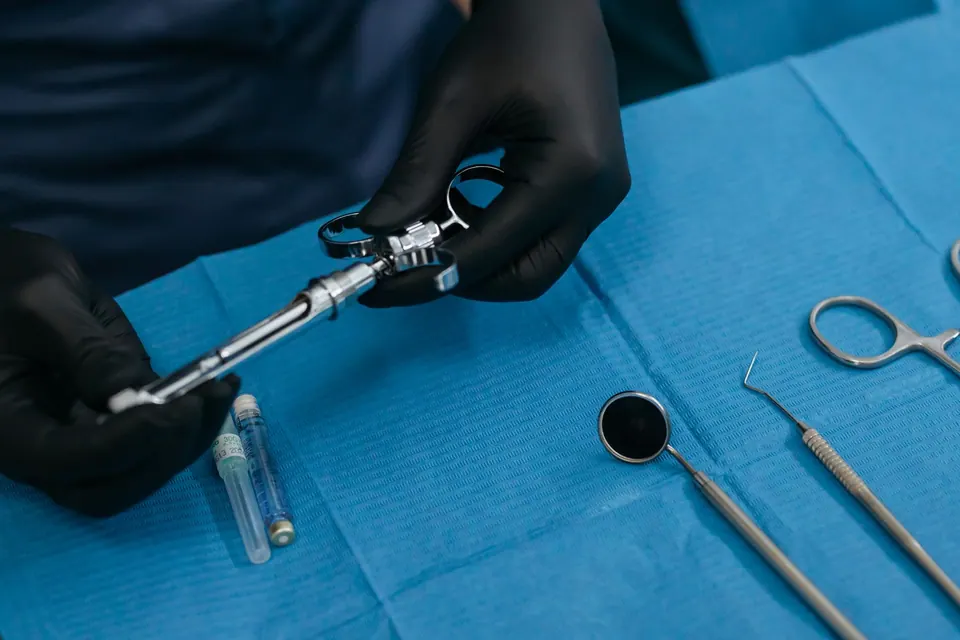
The procedure is done under local anaesthetic, preceded by a numbing gel. It can be performed with a scalpel and a few stitches, with electrosurgery or with a laser: all these tools exist, and a laser can reduce bleeding and sometimes avoid stitches. The result depends above all on a correct indication and technique, more than on the instrument.
Afterwards:
- moderate discomfort for a few days, eased by suitable pain relief;
- lukewarm, soft food at first;
- a white or yellowish look to the wound, which is normal during healing;
- for a tongue tie, mobility exercises, often guided by a speech therapist, to stop the wound healing too short and to learn the new movements.
The risks are low but real: bleeding, infection, a tight scar or the frenum re-forming. The ducts of the salivary glands also run under the tongue and must be protected, which is one of the reasons to entrust this procedure to a trained practitioner.
Having a frenum examined in Agdal
There is no single right age to intervene: in infants when a feeding problem is confirmed, in children when speech or swallowing is affected, after the canines erupt for a gap between the front teeth, and in adults at any age when there is discomfort or a risk to the gum.
At German Dental Clinic in Agdal, examining the frena is part of the assessment, for children within children's dentistry follow-up as well as for adults: tongue and lip mobility, gum condition and tooth position. When a procedure is indicated, how it would be done is explained, along with any coordination with the paediatrician, speech therapist or orthodontist. If you live in Rabat, you can book an appointment for an opinion.
Frequently asked questions
Does a tongue tie stop a child from speaking properly?
It can make some sounds harder, those that require lifting the tip of the tongue, such as a rolled r, l, t or d. But most speech difficulties have other causes. A speech and language assessment, together with an examination of tongue mobility, shows whether the frenum really plays a part and whether a procedure would help.
At what age can a tongue tie be treated?
There is no strict minimum or maximum age. In infants, a frenotomy is considered when a feeding problem linked to the frenum is confirmed. In children, it is considered when speech, swallowing or hygiene are affected, usually alongside therapy. In adults, it remains possible when there is a genuine problem.
Is a frenectomy painful?
The procedure is done under local anaesthetic and should not hurt. In the following days the area can be tender, especially when eating or talking, and suitable pain relief is usually enough. The wound turns whitish while it heals, which is normal. Increasing pain or a fever is a reason to get back in touch.
Can the frenum grow back after the procedure?
Yes, it can happen, especially with a tongue tie: as it heals, the wound may contract and restrict movement again. The exercises recommended afterwards are designed precisely to prevent this. Follow-up visits check the healing and allow the exercises to be resumed if the tongue loses some of its range.
Does the lip frenum have to be cut to close a gap between the front teeth?
Not routinely. In children, the gap often closes on its own when the adult canines arrive. When it persists and the frenum is genuinely involved, the space is usually closed orthodontically first and the frenum treated afterwards if needed, to limit the risk of the gap reopening.
The information on this page is general. Only a consultation allows a diagnosis and a suitable treatment plan.
A question about your own situation?
Dr Fenjero Walid sees patients in Agdal, Rabat, for an assessment and answers that fit your case.