The essentials: four habits to remember
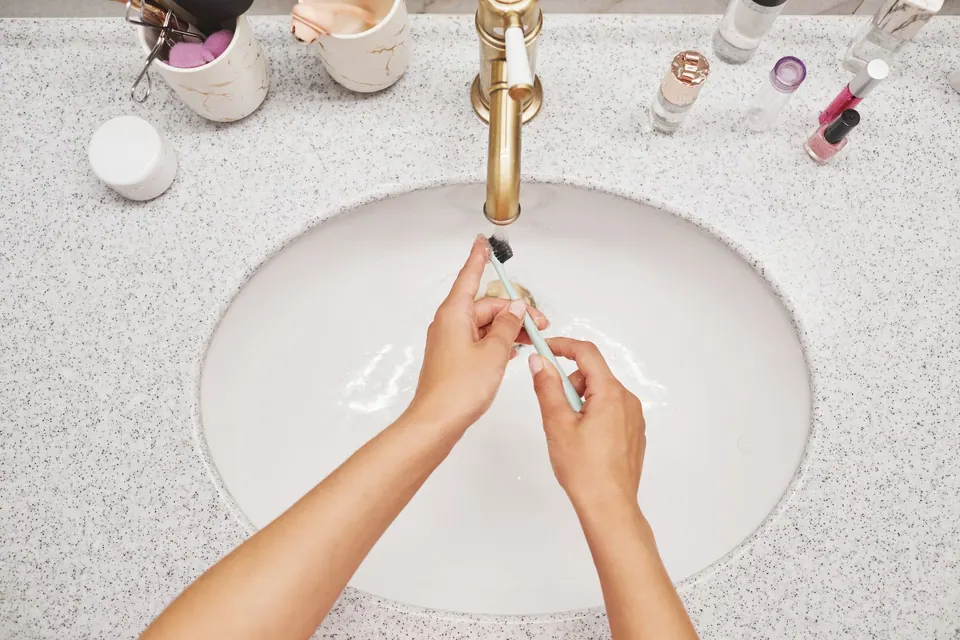
Looking after aligners takes four daily habits: rinse the aligner in cold water every time you take it out, brush it gently morning and evening with a soft brush and mild soap, brush your teeth before putting it back, and store it in its case whenever it is not in your mouth. Never hot water, never abrasive toothpaste, and nothing but water to drink while you are wearing it.
These precautions are about more than comfort. An aligner covers the teeth like a lid, and saliva, which naturally cleans the mouth and neutralises acids, barely circulates underneath. Anything trapped there, whether sugar, acid or plaque, sits against the enamel for hours. Poor care can therefore encourage decay, white spots from demineralisation, gum inflammation and bad odours, not to mention an aligner that turns cloudy and loses its discretion.
The same principles apply to retainers, with a few differences covered below.
A typical day with aligners
Clear aligner treatment relies on near-constant wear, and your dentist will give you a daily wearing time to stick to. How you organise your day makes all the difference.
- On waking: take the aligners out, rinse and brush them, then brush your teeth before putting them back. This is also when you move to the next set if your schedule says so, unless the dentist advises doing it in the evening.
- At meals: remove them with your fingers, starting at the back teeth, and put them straight into the case. After eating, brush your teeth; if you cannot, rinse your mouth thoroughly with water and brush as soon as possible.
- Between meals: grazing multiplies removals and cuts wearing time. Grouping your meals and snacks helps you meet the target.
- In the evening: the most thorough clean, teeth with floss or interdental brushes, then the aligners.
- At night: the aligners stay in.
If your dentist has given you small cylinders to bite on (often called chewies), use them for a few minutes each time you put the aligners back: they help the trays seat fully on the teeth.
Eating and drinking without harming teeth or aligners
The basic rule is simple: only plain water is drunk with aligners in. Every other drink brings its own problem:
- hot tea and coffee can warp the plastic and stain it; sweet mint tea combines heat, sugar and pigment;
- soft drinks, fruit juices and flavoured waters are sugary or acidic: trapped under the aligner, they bathe the enamel without saliva being able to dilute them;
- coloured drinks such as red wine or some herbal infusions stain the tray quickly.
If, exceptionally, you drink something other than water without removing your aligners, choose something cold and unsweetened, then rinse your mouth. Otherwise, take them out, drink, rinse and put them back.
As for food, you never eat with aligners in, not even a small snack: food gets crushed inside, the pressure can crack them and debris stays trapped. Chewing gum is off limits with trays in. Finally, smoking yellows the plastic quickly and harms the gums: if you smoke, take them out and rinse your mouth before putting them back.
What never to do
Most damaged aligners are damaged by well-meant habits. Avoid:
- hot or boiling water, the dishwasher and the microwave: the plastic warps and no longer fits the teeth;
- ordinary or whitening toothpaste: its abrasive particles scratch the surface, which turns cloudy and holds more bacteria;
- bleach, alcohol, and coloured or alcohol-based mouthwashes: they can damage or stain the material; some denture cleaning products are also too harsh for these plastics, so ask before using them;
- wrapping it in a paper napkin at a restaurant: the number one cause of lost aligners;
- leaving it within reach of a pet: the smell of saliva attracts dogs, which happily chew them;
- leaving it in a car in the sun or on a radiator;
- biting it hard into place: insert it with your fingers and let it settle gradually;
- reusing an old aligner for another purpose, such as protecting against grinding: our article on which tray for which purpose explains why that is not a good idea.
And always keep the previous set in its pouch: if a tray is lost or broken, your dentist will tell you whether to go back to it in the meantime.
Odour, white deposits, yellowing: what to do
A few problems come up often, and most are easily solved:
- A bad smell points to an established biofilm, on the aligner or on the teeth. Step up brushing of both, clean the case too, and make sure you are not putting aligners back over unbrushed teeth. If the smell persists, dry mouth, gum inflammation or decay may be involved: mention it at your check-up.
- A hard white film or white spots are usually tartar formed from minerals in saliva. Soaking in a cleaning product designed for aligners, following the instructions, helps dissolve them. Do not scrape with anything hard.
- A yellow or brown tint generally comes from coffee, tea, tobacco or strongly coloured spices. It does not always come off, hence the value of prevention.
- A cloudy or scratched look often means toothpaste or too hard a brush has been used.
- A crack, or an edge that rubs the cheek: contact the practice and do not try to file it yourself.
An aligner is only used for a few weeks, so slight dulling at the end of its cycle is not a concern. A retainer, on the other hand, is worn for much longer and deserves even more regular care.
Attachments and gums: keeping teeth clean during treatment
Caring for aligners is only worthwhile if the teeth are clean. During treatment, a few points need particular attention:
- attachments, the small bumps bonded to some teeth, hold plaque along their edges: brush carefully around each one;
- the contacts between teeth tighten or open as the teeth move: floss or interdental brushes remain essential every evening;
- fluoride toothpaste protects the enamel; for people at high risk of decay, the dentist may suggest extra fluoride protection;
- gums that bleed or swell are not a normal side effect of treatment: they signal plaque that is not being removed and should be reported.
Regular check-ups confirm that the trays fit and also keep an eye on your gums. A professional scale and clean during treatment is often useful, especially behind the lower front teeth where tartar builds up readily.
After treatment, and follow-up in Agdal
Once the teeth are aligned, retainers take over, often at night and for the long term. The routine stays the same: rinse on removal, gentle brushing in cold or lukewarm water, always the case, no sugary drinks while wearing them. Because they are used far longer than an aligner, they wear and eventually need replacing. Our article on retainers after aligners or braces explains why retention continues for so long.
At German Dental Clinic in Agdal, the dentist shows you how to insert, remove and clean your aligners when the first set is handed over, then checks the trays, attachments and gums at each visit. If you are having treatment in Rabat and run into a problem with odour, deposits or a damaged aligner, you are welcome to book an appointment for a check.
Frequently asked questions
Can I drink coffee with my aligners in?
It is better to take them out. Hot coffee can warp the plastic and stains it quickly, and if it is sweetened, it leaves sugar trapped against the enamel. The simplest approach is to remove the aligners, drink your coffee within a reasonable time rather than sipping all morning, rinse your mouth with water and then put them back.
Do I need to brush my teeth every time I put the aligners back?
That is ideal, especially after a meal. When it is not possible, at work or in a restaurant, rinse your mouth thoroughly with water, rinse the aligner, put it back and brush as soon as you can. The real problem is the habit of putting aligners back over teeth still covered in food debris, several times a day.
How do I remove white deposits from a tray?
These deposits are often tartar formed from the minerals in saliva, and daily brushing limits them. To dissolve them, use a cleaning product designed for aligners and retainers, following the stated soaking time. Avoid scraping with anything hard, which scratches the plastic. If the deposits will not shift, show the tray at your check-up.
Can I clean my aligners with toothpaste?
Ordinary toothpaste is best avoided, and whitening toothpaste even more so. Its abrasive particles create fine scratches that turn the aligner cloudy and trap bacteria. A mild unscented soap or a dedicated product, with a soft brush kept for this purpose and cold or lukewarm water, cleans effectively without damaging the surface.
My aligner smells even after cleaning: is that serious?
Usually it means a biofilm is re-forming quickly: brush your teeth and the aligner more carefully, clean the case and drink enough water. If the smell persists despite good hygiene, look for a cause in the mouth, such as gum inflammation, decay or dry mouth. Mention it to your dentist.
The information on this page is general. Only a consultation allows a diagnosis and a suitable treatment plan.
A question about your own situation?
Dr Fenjero Walid sees patients in Agdal, Rabat, for an assessment and answers that fit your case.